

Trying Multiple AI Tools vs. Focusing on One Workflow: Which Actually Works for Small Businesses?
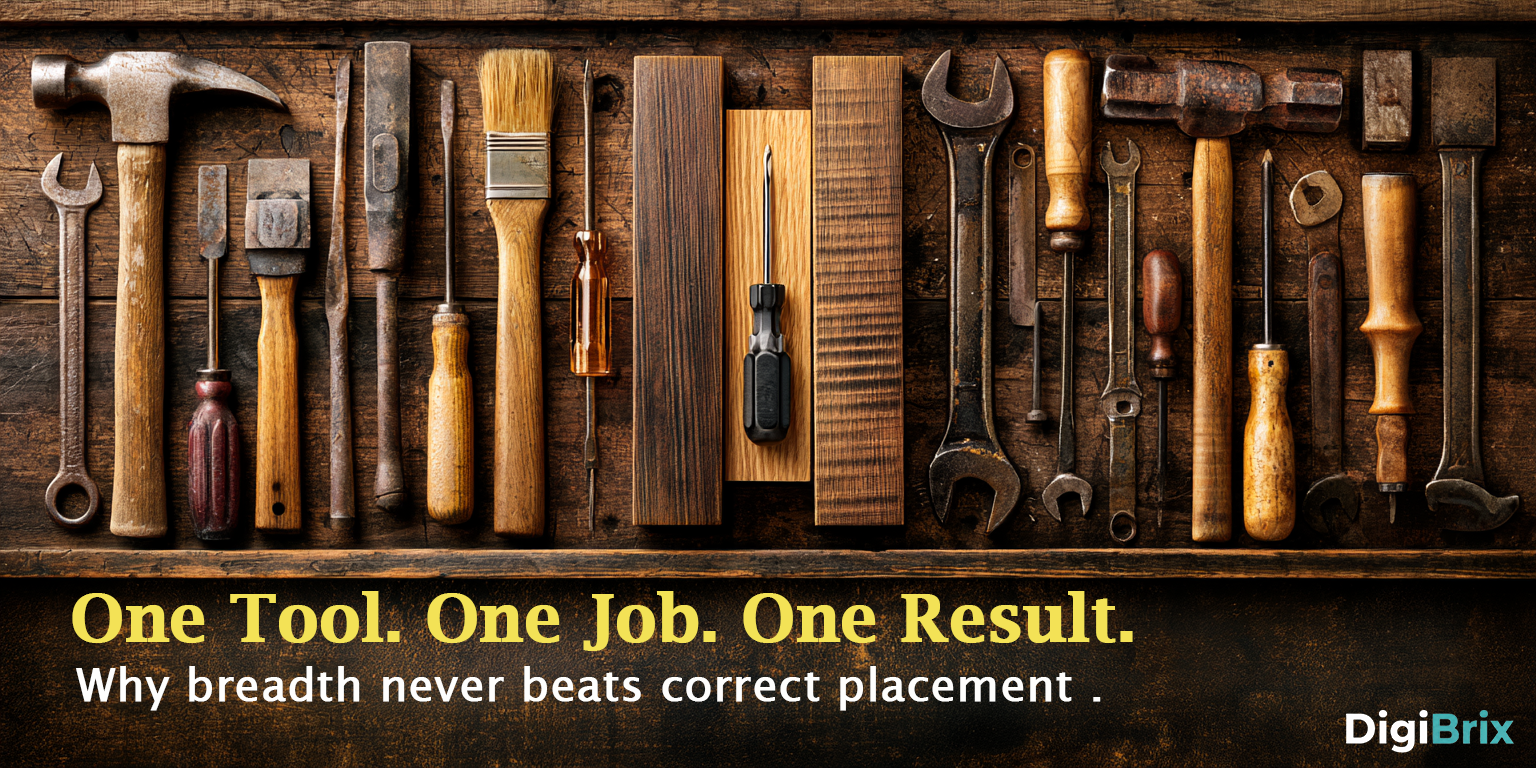
The answer is not popular. But the data and the results both point the same direction.
By Stephanie Ferguson | DigiBrix Consulting
The question gets asked constantly: should you be experimenting with multiple AI tools, or is the better move to find one workflow and go deep on it? The direct answer: focusing on one workflow produces better outcomes for small businesses. Consistently. The multi-tool approach feels productive but almost always stalls. The single-workflow approach feels slower at first but creates something that actually runs.
Key Takeaways
Multiple AI tools create the feeling of progress without the substance of it.
Focused, single-workflow adoption produces infrastructure. Experimentation produces overhead.
The AI adoption abandonment rate more than doubled in 2025 — a direct result of spread-too-thin implementation.
One correct placement will outperform ten half-integrated experiments every time.
The comparison is not tool vs. tool. It is strategy vs. strategy.
What Multi-Tool Adoption Actually Costs
The appeal of trying multiple tools is understandable. AI is developing fast. New tools launch constantly. But the cost of multi-tool adoption shows up in a specific way: attention fragmentation. Each tool requires a learning curve, prompt development, integration thinking, and ongoing maintenance. Spread across five tools, that overhead compounds quickly. In 2025, 42 percent of companies abandoned most of their AI initiatives, up from 17 percent the year before. Companies scrapped an average of 46 percent of AI proof-of-concepts before production. The primary reasons cited were unclear value and total cost — not tool quality. The tools worked. The strategy did not.
What Single-Workflow Focus Actually Produces
When you commit to one workflow, you stop managing AI and start letting it work. You develop real prompts for that specific context. You learn the edge cases. You build the habit. And within 30 to 60 days, the workflow runs quietly in the background without requiring your constant attention. Research on what drives AI value consistently shows the same finding: organizations getting measurable results invest heavily in depth, not breadth.
The Right Comparison Frame
The right comparison is not tool vs. tool. It is widespread experimentation vs. intentional placement. Widespread experimentation means trying five tools, using each for different tasks, evaluating loosely, repeating. This feels active but produces little lasting infrastructure. Intentional placement means identifying one workflow that meets the criteria for AI readiness, choosing the right tool for that context, running it until it works, then holding.
How to Choose the One Workflow Worth Starting With
Three criteria: the task is repetitive enough to justify the setup time; the task is clearly defined enough that AI can produce consistent output; the workflow is clean enough that AI is not being asked to navigate your existing confusion. If a workflow meets all three, it is a candidate. If it meets two, clean up the third before proceeding.
Five FAQs
Is there ever a good reason to use multiple AI tools?
Yes, when each tool is placed in a distinct, well-defined workflow that has already been validated. Get one right first.
Does it matter which AI tool I choose for my first workflow?
Less than most people think. The tool matters far less than the clarity of the workflow it is placed in.
How long should I work with one workflow before adding a second?
Until the first one is running without your active management — usually 60 to 90 days.
What if the workflow I chose does not work well with AI?
Diagnose which condition was missing — clarity, repetition, or clean process — and fix it or choose a different workflow.
How do I resist the pressure to try every new AI tool that launches?
Track the one workflow you have embedded. When you have a real before/after number showing it works, the next shiny tool looks a lot less compelling.
Closing
Most businesses are spending more time managing AI than benefiting from it. That is the cost of the multi-tool approach. One workflow, placed correctly, changes that math. It stops being something you manage and starts being something that quietly does its job. The free Workflow Readiness Quiz at digibrixconsulting.com is a five-minute starting point for finding which workflow in your business is most ready.
Tell me in the comments: are you spread across multiple tools or focused on one workflow?
#AIStrategy #PlacementOverPiloting #QuietAI #DigiBrix #SmallBusiness #SoloPreneur #WorkflowDesign #AIAdoption
Stephanie is the founder of DigiBrix Consulting. She helps small business owners identify exactly where AI belongs in their workflows through the Placement Over Piloting Method — and get one thing running correctly before touching anything else.